

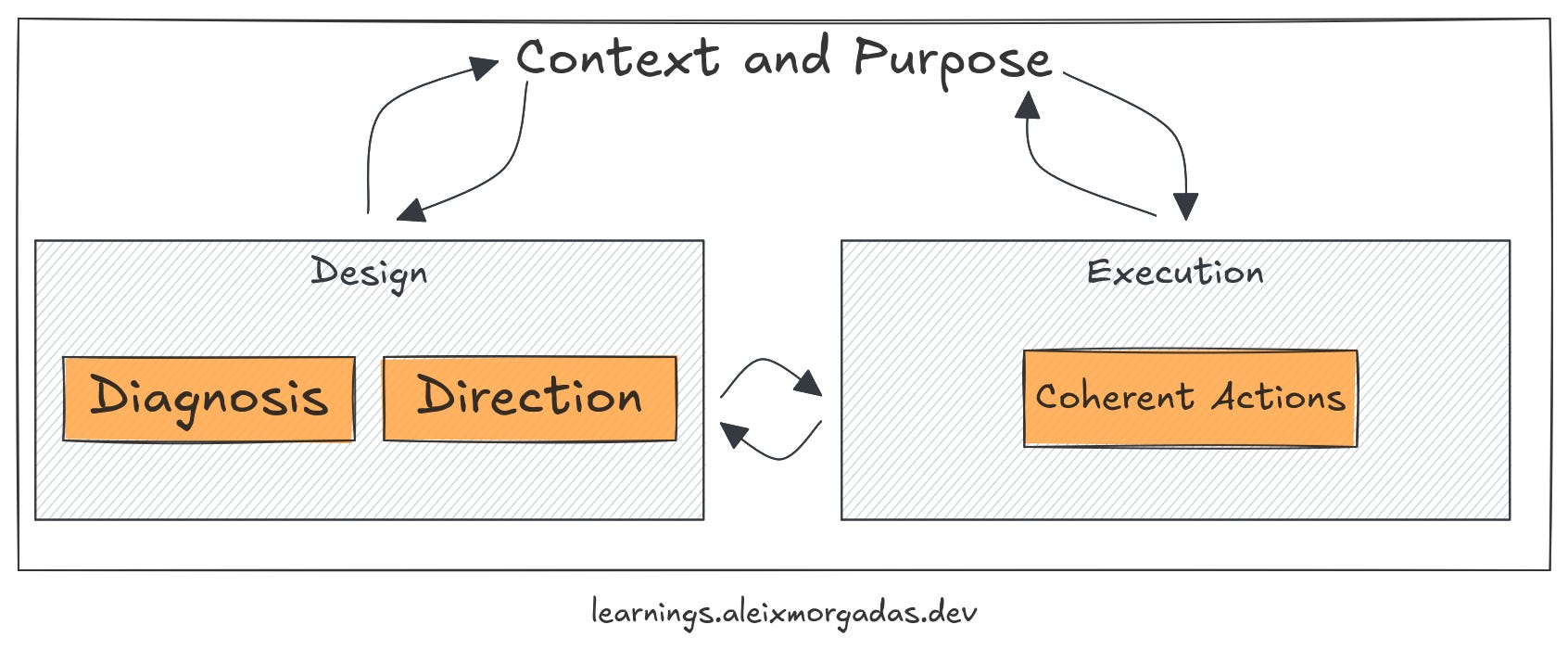
Strategy cannot be split into “decision” and “execution”. As leaders make decisions, and teams executes the plan.
Strategy is both. If you split them, you break the fast feedback loop.
At the same, who owns the execution can lead into misunderstandings like that the leader is the one executing, which leads into micromanagement, and unempowered teams.
That’s something we also need be careful, because it also reduces the feedback loop. It is better that multiple people think and reflect about the strategy, vs one person alone.
So, how can we make sure the team group of people designs and executes the strategy?
The strategy leverages ad hoc groups/teams
Organizations have strong team definitions. A person belongs to a team and reports to a specific person. Therefore, work needs to fit the organization design.
This limits us.
It makes our strategies to fit the operating model, and fight or surrender the existing structures.
Instead, strategy has to leverage informal team groups based on each context and purpose.
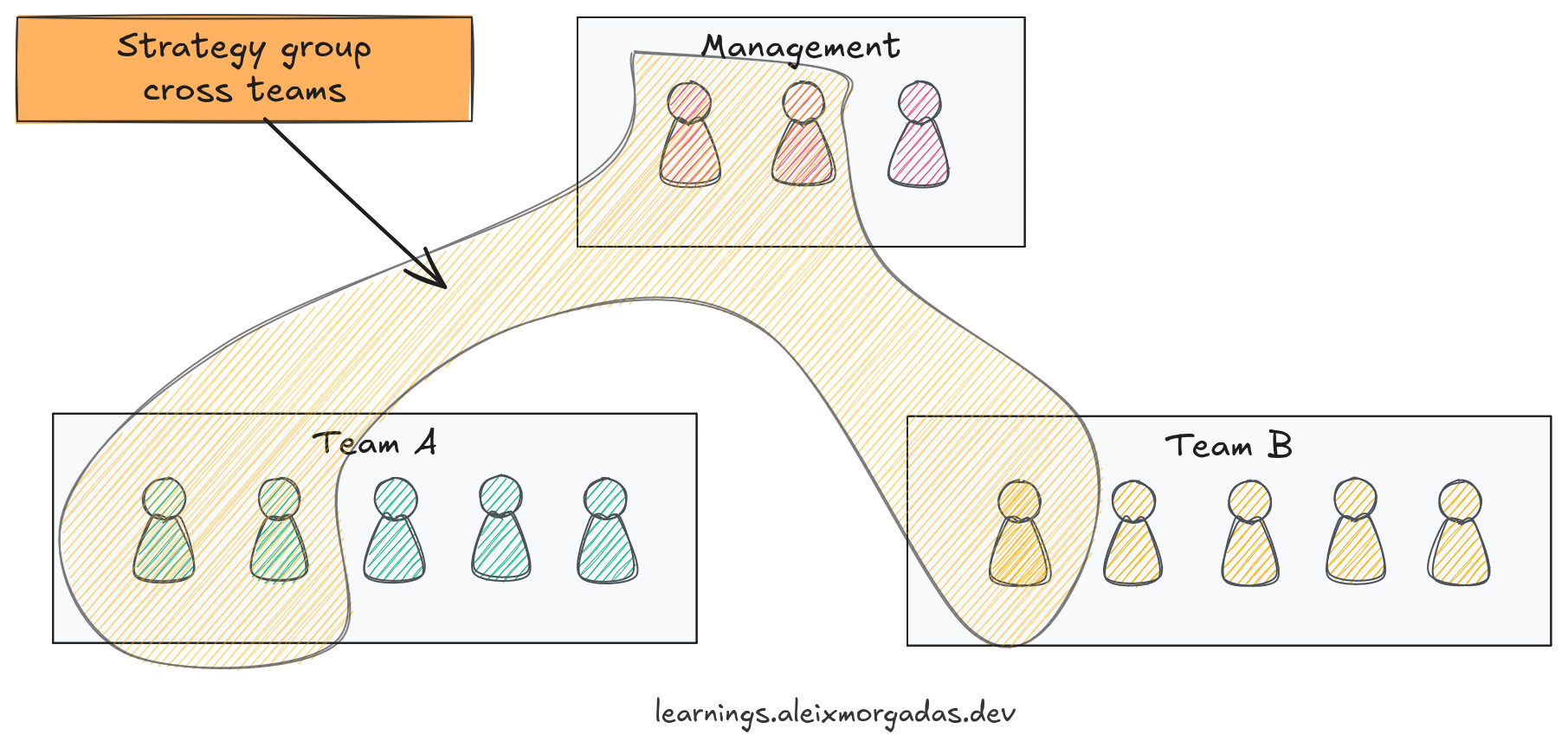
And that ad hoc team can own the design and execution.
This idea/concept is key to increase the odds of the strategy to make the desired impact.
This teams/groups are formed in very different ways. In some organizations, those manifest as Slack channels like #tmp_<inititative>. Each organization has its own definition.
What makes this kind of ad hoc teams quite suitable for strategies is that it has the right people with:
Business context.
Decision-making authority, including budget, and organizational influence.
Team specific context and situation at hand.
High-speed communication channel.
You optimize for fast feedback loop and decision-making.
Leveraging coherent actions
I always suggest people to have 2-3 coherent actions prepared for any strategy. For the next reasons:
Not all the teams have the maturity to understand a strategy and be ready to translate that to time scoped coherent actions.
Not starting soon enough to work on the strategy loses momentum, and people go back to work as usual.
Longer feedback loop to understand if the strategy is helping us to overcome the high-stakes business challenge.
BUT, I wouldn’t make all the coherent actions be decided by the ad hoc strategy team. Because you want teams to start owning and showing strategic thinking and execution.
I suggest you to find that people in your team that:
Start gaining ownership on the coherent actions, and start suggesting next steps that are coherent by themselves.
They are able to spot important areas, and proactively communicate and solve by themselves, always aligned with the strategy.
Your goal is to identify the future leaders that can make strategy happen. You want to know how much guidance the team need, and purposely delegate more and more to the right people.
They will communicate early, and this will help you to achieve the right fast feedback loop your strategy needs.
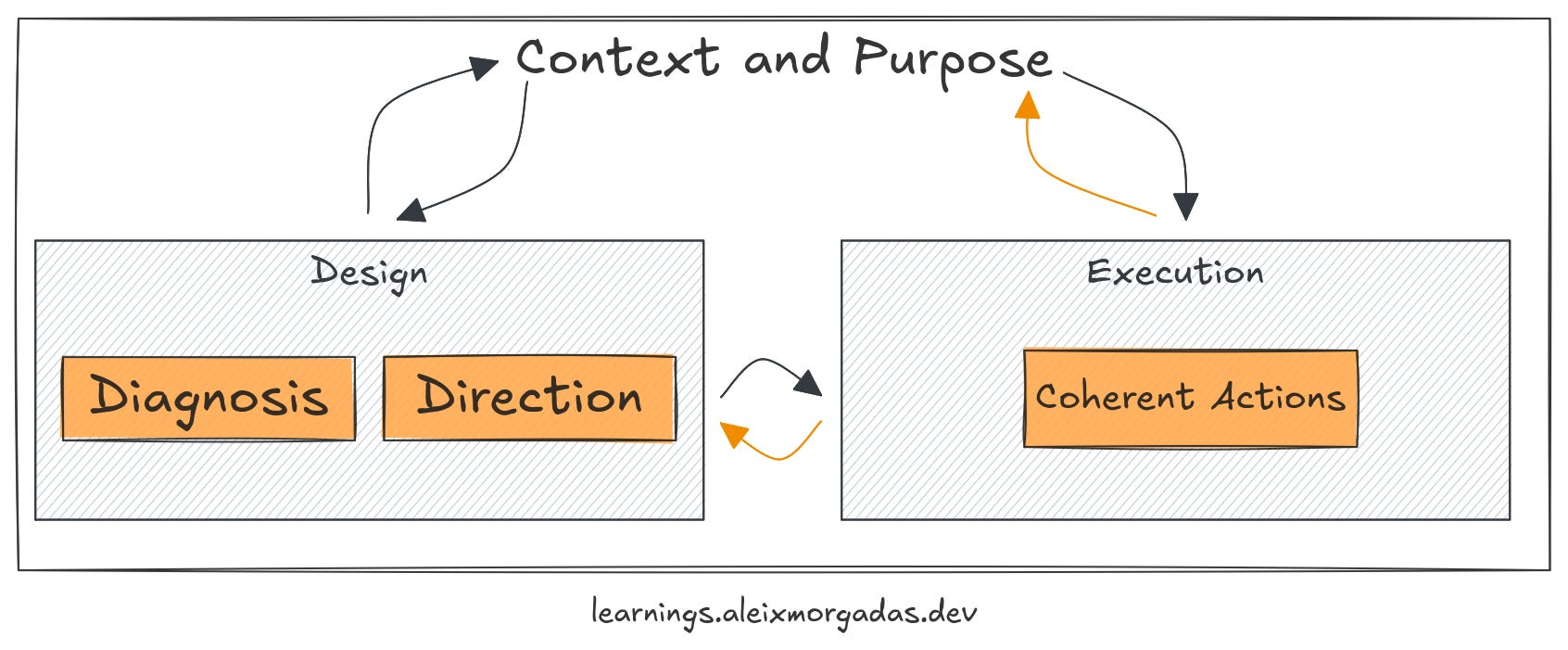
And by being part of the design phase, they will be able to understand how that informs the strategy, and that feedback helps the whole organization to make faster informed decisions.
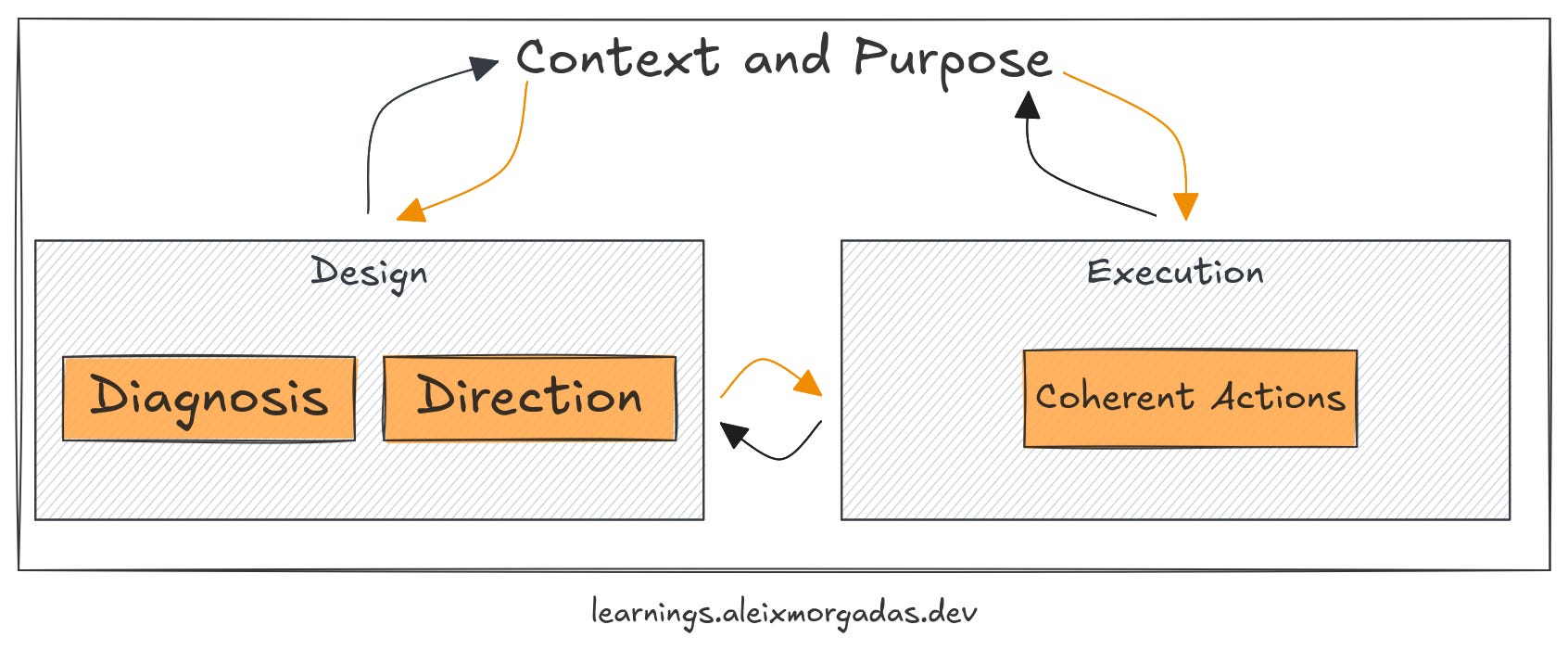
And by doing that, they will learn more about the whole process, giving them more context, better decision-making, and autonomy along the way.
After repeating this loop multiple times, you have trained a great professionals on strategy within the company.
Next time you need to overcome a high-stake business challenge, the key people would be already trained on the matter.