
Common Engineering Strategy Failure Factors
Make your strategy more robust to avoid common mistakes

Strategies fail for multiple reasons, internal and external. Some of those failures are common, and we can take action to maximize the odds of succeeding.
Let’s see some of those, and see in which step on the engineering strategy can we tackle them.
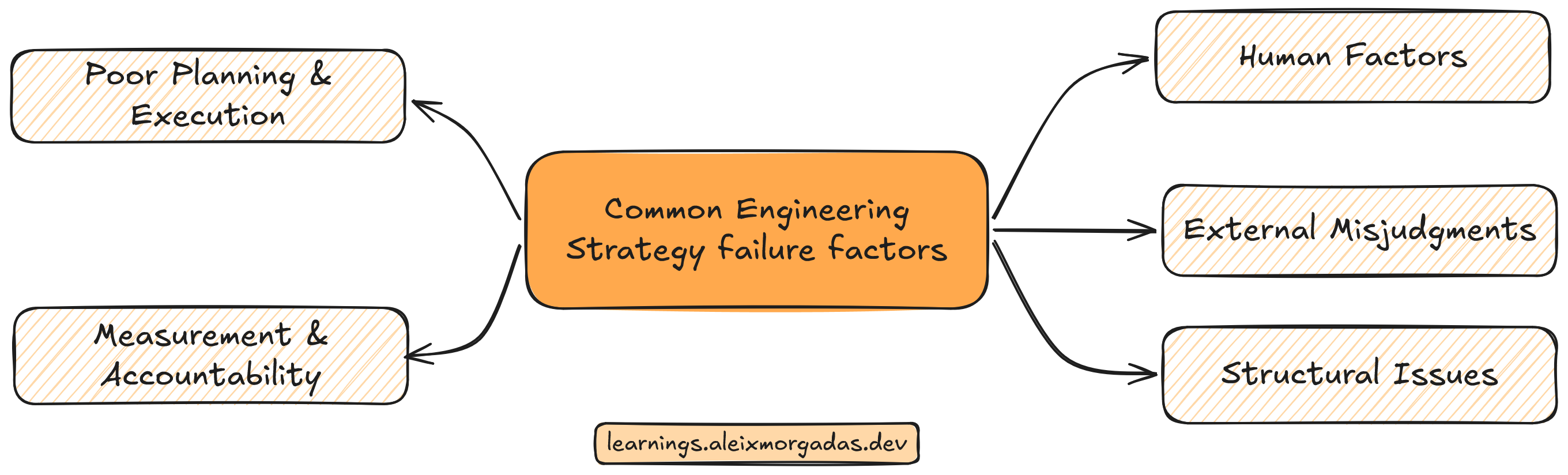
1. Poor Planning & Execution
Lack of situational awareness: Leadership ignoring the landscape they are competing in.
Unclear Goals: Vague or unrealistic objectives make it hard to measure success.
Lack of Alignment: Strategy isn’t connected to the organization’s mission, values, or resources.
Overcomplication: Too many priorities or steps dilute focus and effort.
Ignoring Implementation: A brilliant strategy on paper fails if execution isn’t planned (e.g., no timelines, owners, or milestones).
2. Human Factors
Resistance to Change: Employees or stakeholders may not buy in, especially if they feel excluded from the process.
Poor Communication: If the strategy isn’t clearly explained, teams won’t understand their role in it.
Lack of Skills/Resources: The team may lack the talent, tools, or budget to execute the plan.
Leadership Gaps: Weak or inconsistent leadership fails to inspire or hold teams accountable.
3. External Misjudgments
Market Shifts: Assuming static conditions (e.g., customer needs, competition, technology) can render a strategy obsolete.
Ignoring Feedback: Failing to adapt based on real-time data or stakeholder input.
Overestimating Control: External factors (e.g., regulations, economic downturns) can disrupt even the best-laid plans.
4. Structural Issues
Siloed Thinking: Departments working in isolation create misalignment.
Short-Term Focus: Prioritizing quick wins over long-term goals (e.g., quarterly profits vs. sustainability).
No Flexibility: Rigid strategies break when faced with unforeseen challenges.
5. Measurement & Accountability
No KPIs: Without clear metrics, progress can’t be tracked.
No Consequences: Lack of accountability.
Overconfidence: Assuming success without testing assumptions (e.g., pilot programs, A/B testing, failing small).
I will update the list as I discover more factors 👍
As you can see, strategy fails for multiple reasons. And I’m sure you faced several of those factors on your journey as strategist, leader, or person that has been exposed to bad strategies.
When we design an Engineering Strategy, we might be tempted to jump into architecture, tooling, deployment pipelines, methodologies, … Things that are more related to Tech.
That’s an avoidable mistake.
You can find more info on Engineering Strategy in the next Introductory guide.

Because we all missed the big picture before hitting the wall. Some of us had the chance to realize that was our mistake, and we can do better.
When you start designing your engineering strategy, take a step back and do a collaborative assessment on the state that you’re in.
Factors to avoid during Purpose, Business Context, and Analysis
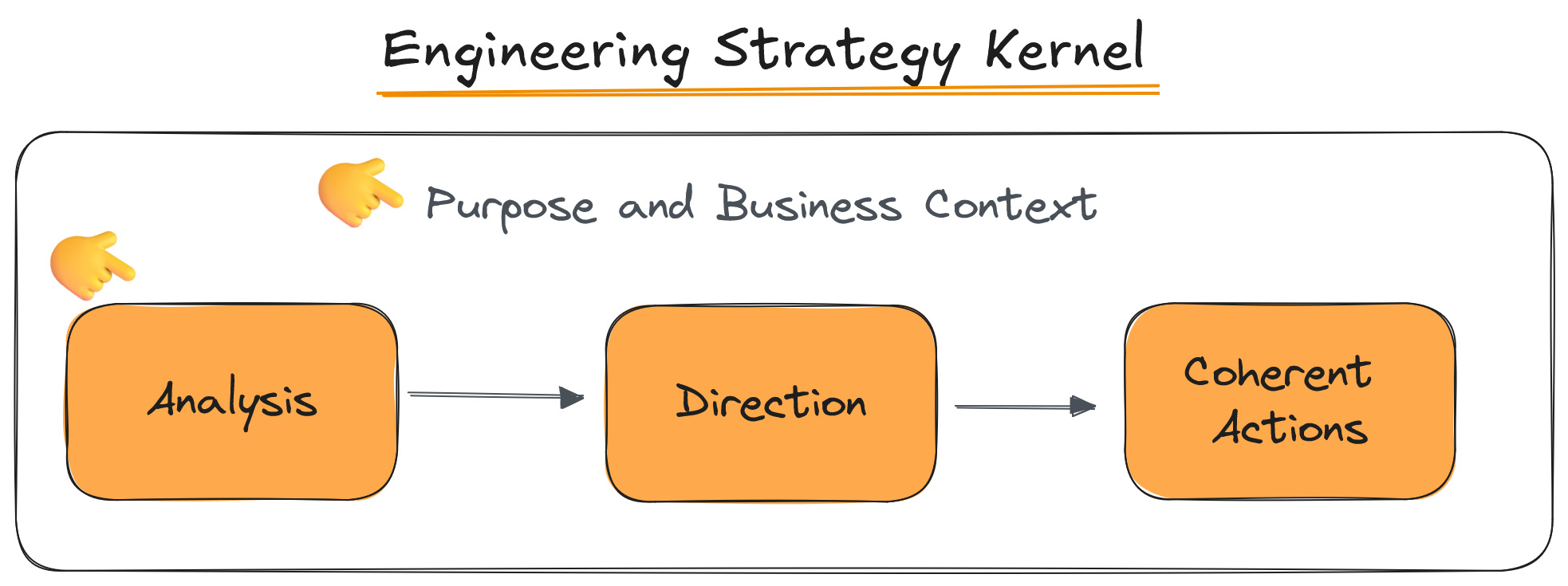
At the Purpose and Business Context, and Analysis, take a step back and consider all the previous factors as part of the strategy.
During those steps, I carefully review them taking into account:
Poor Planning & Execution
Human Factors
External Misjudgments
Structural Issues
Here is a list of strategies that set the purpose and analysis to avoid those factors:


Factors to avoid during Direction
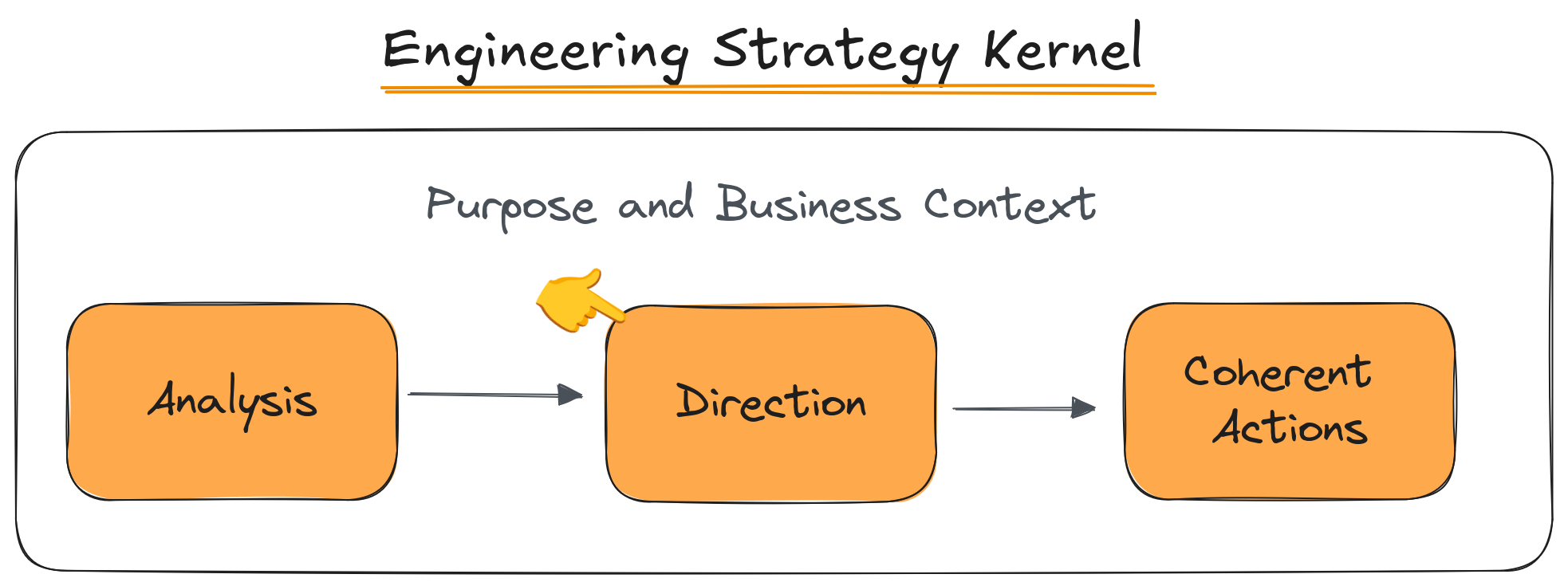
When you’re setting the direction, pay extra attention to the next factors:
Poor Planning & Execution
Human Factors
Measurement & Accountability
Here is the example list:


Factors to avoid during Coherent Actions
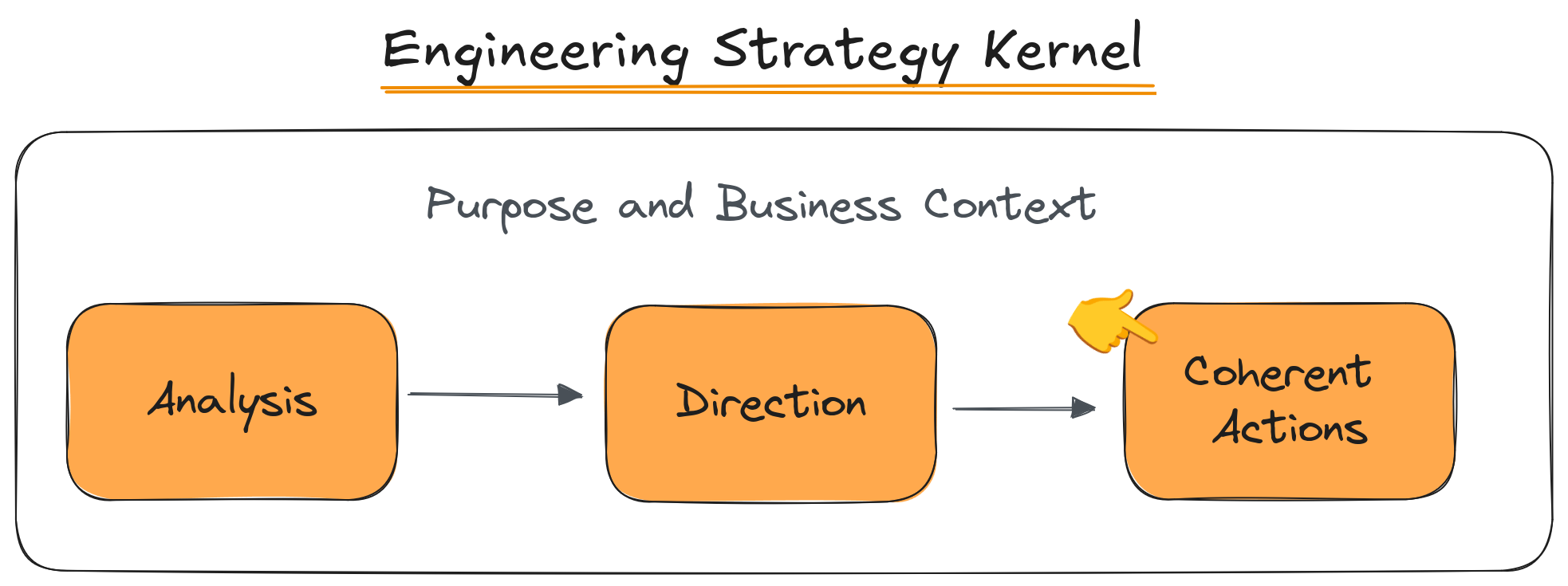
When you’re deciding and executing the coherent actions, that’s a great opportunity to stress the strategy and see which are the areas that you need to improve.
The main factors to look for are:
Poor Planning & Execution
Human Factors
Structural Issues
Here are some posts that used the coherent actions to iterate the strategy.


Taking the Strategy Common Failure Factors into account won’t necessarily avoid them, but can help to reduce the chances of designing and executing a poor strategy.
I always have those factors present in during my journey, and the more people aware of those that can have this holistic view of the company situation and context the better, brining those concerns early can save you months of suffering.
This will avoid you to be blind sided by stuff that’s not 100% “tech”, but influences 100% the strategy outcome.
💬 Let us know in the comments which are the main factors that caused a strategy of yours to fail, and what did you learn from that experience!